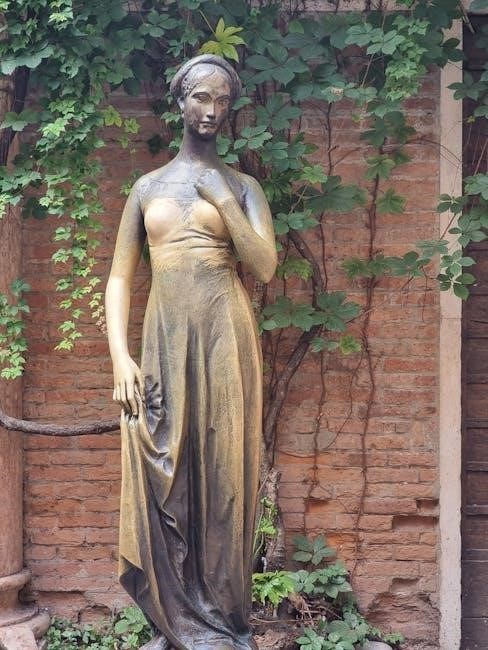
Romeo and Juliet: Act III Study Guide
Act III marks a turning point, escalating tensions with Tybalt’s challenge and Mercutio’s tragic death․ Romeo’s banishment profoundly impacts Juliet,
fueling internal conflict and foreshadowing the play’s devastating conclusion․

Overview of Act III
Act III of Romeo and Juliet represents a dramatic shift in the play’s trajectory, moving from youthful romance to a relentless cycle of violence and despair․ The act is dominated by the escalating feud between the Montagues and Capulets, culminating in a pivotal street fight that irrevocably alters the fates of the protagonists․
The initial scene explodes with tension as Tybalt seeks revenge on Romeo for crashing the Capulet feast․ Mercutio’s involvement ignites a deadly confrontation, ultimately leading to his death at Tybalt’s hand․ This event triggers Romeo’s furious response, resulting in Tybalt’s demise and Romeo’s subsequent banishment by the Prince․
Following this tragedy, the act explores Juliet’s agonizing reaction to the news of Tybalt’s death and Romeo’s exile․ Her internal conflict between loyalty to her family and her love for Romeo intensifies, setting the stage for the desperate measures she will eventually contemplate․ The act’s conclusion finds Romeo seeking solace and guidance from Friar Laurence, desperately grappling with his new reality․
Scene 1: The Initial Conflict
Scene 1 erupts in the bustling streets of Verona, immediately establishing a volatile atmosphere fueled by the longstanding Montague-Capulet feud․ Tybalt, consumed by hatred, actively searches for Romeo, intending to avenge the perceived insult of Romeo’s presence at the Capulet ball․ This pursuit sets in motion a chain of events leading to tragedy․
The confrontation begins with Benvolio attempting to maintain peace, but Tybalt’s aggression proves insurmountable․ Mercutio, a close friend of Romeo, steps forward, engaging Tybalt in a heated exchange of words and ultimately, a duel․ His quick wit and fiery temper escalate the situation rapidly, demonstrating his loyalty to Romeo and disdain for Tybalt’s arrogance․
Romeo initially attempts to avoid conflict, motivated by his secret marriage to Juliet and the hope for reconciliation through their union․ However, Mercutio’s death at Tybalt’s hand forces Romeo to abandon his pacifist stance, igniting a furious response and setting the stage for a fatal duel․ The scene’s intensity underscores the destructive power of unchecked hatred․
Tybalt’s Challenge and Romeo’s Response

Tybalt’s challenge to Romeo is driven by a deep-seated animosity towards the Montague family, exacerbated by Romeo’s attendance at the Capulet feast․ He views Romeo’s presence as a blatant disrespect and a personal affront, demanding satisfaction for the perceived insult․ This challenge isn’t merely about Romeo himself, but about upholding the honor of the Capulet name․
Initially, Romeo attempts to deflect Tybalt’s aggression, prioritizing peace and motivated by his newfound familial connection through marriage to Juliet․ He expresses affection for Tybalt, attempting to reason with him and avoid bloodshed․ This response stems from a desire to end the feud and protect his relationship with Juliet, showcasing a shift away from traditional Montague aggression․

However, Romeo’s refusal to fight is perceived as cowardice by Mercutio, who steps in to defend Romeo’s honor․ This intervention ultimately leads to Mercutio’s death, shattering Romeo’s hopes for a peaceful resolution and fueling his rage․ The initial attempt at diplomacy tragically backfires, escalating the conflict to a deadly level․
Mercutio’s Role and Death
Mercutio serves as a vital foil to Romeo, embodying wit, cynicism, and a more pragmatic view of love and honor․ He’s quick-tempered and delights in verbal sparring, often using puns and wordplay to express his thoughts․ His role is to provide comic relief, but also to offer a contrasting perspective on the romantic idealism of Romeo and Juliet․
When Tybalt challenges Romeo, Mercutio, frustrated by Romeo’s passive response, intervenes, drawing his sword to defend the Montague honor․ He believes Romeo’s refusal to fight is a sign of weakness and feels compelled to take action․ This impulsive decision highlights Mercutio’s fiery nature and his commitment to his friends․
Mercutio’s death is a pivotal moment in the play․ He is fatally wounded by Tybalt, uttering the famous line, “A plague o’ both your houses!” This curse foreshadows the tragic consequences of the feud and places blame on both families․ His death ignites Romeo’s fury, transforming him from a pacifist into a vengeful warrior․
Romeo’s Transformation and the Duel with Tybalt
Initially, Romeo attempts to avoid conflict with Tybalt, motivated by his secret marriage to Juliet and the hope for peace between their families․ He tries to reason with Tybalt, demonstrating a reluctance to engage in violence․ However, Mercutio’s death dramatically alters Romeo’s character․
Witnessing his friend’s demise fuels an intense rage within Romeo․ He is consumed by grief and a desire for revenge, abandoning his previous pacifism․ This marks a significant transformation, as he embraces a more traditionally masculine role, prioritizing honor and retribution․
The ensuing duel with Tybalt is swift and brutal․ Romeo, driven by passion, easily defeats and kills Tybalt․ This act, while born of grief and loyalty to Mercutio, seals his fate and sets in motion the tragic events that follow․ His transformation highlights the destructive power of the feud and the consequences of unchecked emotion․
The Prince’s Judgment and Romeo’s Banishement
Following the fatal duel between Romeo and Tybalt, the Prince delivers a harsh, yet arguably just, judgment․ Despite Romeo’s explanation of Mercutio’s death and Tybalt’s initial aggression, the Prince prioritizes maintaining order within Verona․ He views Romeo’s act as a grave offense against the law, a disruption of the peace he is sworn to uphold․
Instead of executing Romeo, the Prince decrees banishment as the punishment․ This is a significant concession, considering the customary penalty for killing a kinsman was death․ However, the Prince makes it unequivocally clear that should Romeo return to Verona, he will face immediate execution․
Romeo’s banishment is a devastating blow, effectively separating him from Juliet and plunging both lovers into despair․ It represents a complete loss of hope and sets the stage for the desperate measures they will take to reunite, ultimately leading to the play’s tragic climax․ The Prince’s decision, while intended to restore order, ironically accelerates the unfolding tragedy․
Scene 2: Juliet’s Reaction to the News
Juliet’s initial response to the news of Tybalt’s death and Romeo’s banishment is a whirlwind of conflicting emotions․ She begins with profound grief for her cousin, Tybalt, lamenting his loss with seemingly genuine sorrow․ However, this grief is quickly overshadowed by her overwhelming love for Romeo, and her desperate need to understand the circumstances surrounding the events․

When the Nurse reveals that Romeo is the one who killed Tybalt, Juliet’s emotions undergo a dramatic shift․ Initially, she is consumed by rage and denounces Romeo with harsh words․ Yet, almost immediately, her love for him overrides her anger, and she begins to defend his actions, recognizing Mercutio’s death as a catalyst․
This scene showcases Juliet’s remarkable emotional complexity and her rapid maturation․ She grapples with loyalty to her family and her unwavering devotion to Romeo, creating a powerful internal conflict that foreshadows the tragic choices she will face․ Her shifting emotions demonstrate a profound understanding of the situation’s nuances․
Juliet’s Initial Grief and Confusion
Upon hearing of the fight, Juliet’s first reaction is one of desperate anticipation for Romeo’s safety․ Her initial inquiries focus solely on his well-being, revealing the depth of her love and concern․ When she learns of Tybalt’s death, a wave of grief washes over her, seemingly genuine and heartfelt, as she mourns the loss of her cousin․
However, this grief is quickly intertwined with confusion and a desperate need for clarity․ She struggles to reconcile her love for Romeo with the fact that he has taken the life of a member of her family․ This internal conflict immediately begins to surface, creating a sense of disorientation and emotional turmoil․
Juliet’s initial confusion stems from her inability to fully grasp the circumstances surrounding the duel․ She is caught between her familial obligations and her passionate love for Romeo, a conflict that throws her into a state of emotional chaos․ This scene establishes the foundation for her subsequent emotional journey․
The Nurse’s Revelation and Juliet’s Shifting Emotions
The Nurse’s arrival with the news of Romeo’s banishment dramatically shifts Juliet’s emotional landscape․ Initially, she clings to the hope that Romeo is merely banished from Verona, believing she can still find a way to be with him․ However, as the Nurse reveals the full extent of the Prince’s judgment – permanent exile – Juliet’s hope rapidly dissolves into despair․
Her emotions undergo a turbulent transformation, oscillating between anger, frustration, and profound sadness․ She directs her fury towards Romeo, accusing him of being womanish and lacking courage․ This outburst is not necessarily a reflection of her true feelings for him, but rather a desperate attempt to cope with the unbearable pain of their separation․
The Nurse’s attempts to comfort Juliet are met with resistance, as Juliet feels betrayed and abandoned․ This revelation marks a turning point in their relationship, foreshadowing a growing distance between them․ Juliet’s shifting emotions demonstrate her increasing maturity and her willingness to challenge societal expectations․
Juliet’s Internal Conflict: Love vs․ Loyalty
Juliet is torn between her passionate love for Romeo and her unwavering loyalty to her family, a conflict intensified by Tybalt’s death at Romeo’s hand․ This internal struggle forms the core of her emotional turmoil in Act III․ She grapples with the realization that the man she loves is now branded a murderer and an enemy of her house․
Her initial grief over Tybalt’s death is complicated by her love for Romeo; she mourns her cousin but simultaneously defends Romeo’s actions, recognizing Mercutio’s role in provoking the duel․ This creates a profound moral dilemma, forcing her to question her allegiances․

Juliet’s loyalty to her parents and the societal expectations placed upon her clash with her desire to be with Romeo․ She feels trapped between duty and desire, unable to openly express her love without facing severe consequences․ This internal conflict highlights the destructive power of the family feud and the impossible choices it forces upon the young lovers․
Scene 3: Romeo and Friar Laurence
Romeo, devastated by his banishment, seeks solace and guidance from Friar Laurence․ He descends into despair, viewing exile as worse than death, and initially threatens suicide, overwhelmed by the loss of Juliet’s presence․ His emotional outburst reveals a profound sense of hopelessness and a desperate longing for his beloved․
Friar Laurence attempts to reason with Romeo, scolding him for his excessive grief and reminding him of the blessings he still possesses․ He emphasizes that Romeo is fortunate to be alive and that Juliet is still with him, albeit temporarily․
The Friar then unveils a plan to mitigate Romeo’s situation: he will arrange for Romeo to spend the night with Juliet before fleeing to Mantua․ This allows them one last night together and buys time to potentially reconcile the families and overturn the banishment․ This scene showcases Friar Laurence’s role as a counselor and his attempts to navigate the tragic circumstances․
Romeo’s Despair and Threat of Suicide
Upon learning of his banishment from Verona, Romeo plunges into a state of profound despair, eclipsing even his grief over the feud and Tybalt’s death; He perceives banishment not as a temporary hardship, but as a fate equivalent to death itself – a life without Juliet is utterly unbearable to him․
His anguish manifests in a dramatic and impulsive threat of suicide․ He declares his intention to take his own life, believing that existence without Juliet’s love and companionship is meaningless․ This impulsive reaction highlights the intensity of his passion and his inability to envision a future separate from her․

Romeo’s words are filled with self-pity and a melodramatic expression of his suffering․ He laments his misfortune and wishes he had died instead of Mercutio․ This scene underscores the volatile nature of Romeo’s character and his tendency towards extreme emotional responses, driven by his overwhelming love for Juliet․

Friar Laurence’s Plan for Romeo
Recognizing the perilous situation, Friar Laurence swiftly intervenes to prevent Romeo from acting on his suicidal impulses․ He rebukes Romeo’s passionate outburst, deeming it immature and lacking in reason, emphasizing that self-pity is unworthy of a man․ He proposes a carefully constructed plan to mitigate the severity of Romeo’s banishment․
The Friar’s plan involves Romeo seeking shelter in Mantua․ Before departing, Romeo is to visit Juliet and consummate their marriage, offering her some solace amidst the turmoil․ Laurence intends to publicly announce the marriage, hoping to reconcile the feuding families and ultimately secure a pardon for Romeo․
This plan, while seemingly pragmatic, relies heavily on communication and cooperation – elements threatened by the ongoing animosity between the Montagues and Capulets․ The Friar dispatches a messenger, Friar John, to Mantua to inform Romeo of these crucial developments, setting in motion a chain of events fraught with potential for miscommunication and disaster․
The Theme of Masculinity in Act III
Act III intensely explores the societal expectations of masculinity prevalent in Verona, particularly through Romeo’s evolving actions and internal struggles․ Initially, Romeo attempts to avoid conflict with Tybalt, prioritizing peace and demonstrating a reluctance to engage in the expected violent response to a challenge․
However, Mercutio’s death dramatically shifts Romeo’s behavior․ Consumed by grief and a perceived obligation to avenge his friend’s honor, Romeo abandons his earlier restraint and impulsively kills Tybalt․ This act, while fueled by emotion, aligns with the traditional masculine code of honor and revenge․
This transformation reveals a complex interplay between personal feelings and societal pressures․ Romeo’s internal conflict highlights the damaging consequences of rigidly adhering to masculine ideals, showcasing how they can lead to rash decisions and tragic outcomes․ The act questions whether true strength lies in avoiding violence or in aggressively defending one’s honor․

Key Quotes from Act III
“A plague o’ both your houses!” – Mercutio’s dying curse encapsulates the destructive nature of the Montague-Capulet feud, foreshadowing the tragedy to come and highlighting the senselessness of their hatred․ This quote is pivotal in shifting the play’s tone․
“O, I am fortune’s fool!” – Romeo’s lament after killing Tybalt reveals his sense of helplessness and the belief that fate is controlling his destiny․ He recognizes his actions are driven by circumstance rather than choice, emphasizing the theme of fate․
“Hang thee, young beast, on both thy parents’ heads!” – Tybalt’s fiery challenge to Romeo demonstrates his unwavering hatred and willingness to escalate the conflict․ It exemplifies the impulsive and aggressive nature of the Capulet family․
“Was he not born of woman? His blood doth make my resolution weak․” – Romeo’s initial hesitation to fight Tybalt, stemming from their familial connection through marriage, showcases his internal conflict and a temporary rejection of traditional masculine aggression․
Character Analysis: Romeo in Act III
Romeo undergoes a significant transformation in Act III, evolving from a lovesick romantic to a man consumed by grief and rage․ Initially, he attempts to avoid conflict with Tybalt, demonstrating a reluctance towards violence stemming from his newfound connection through marriage to Juliet․ However, Mercutio’s death ignites a furious response, shattering Romeo’s composure․
Driven by a desire for revenge, Romeo abandons his pacifistic stance and impulsively kills Tybalt, a decision that irrevocably alters his fate․ This act reveals a darker, more volatile side to his personality, challenging the audience’s initial perception of him as purely innocent․
Following the duel, Romeo descends into despair upon learning of his banishment, showcasing his emotional vulnerability and dependence on Juliet․ His reaction highlights a struggle with traditional masculine ideals, oscillating between passionate love and violent retribution․ He grapples with feelings of guilt and weakness, ultimately succumbing to fate’s cruel hand․
Dramatic Irony and Foreshadowing in Act III
Act III masterfully employs dramatic irony and foreshadowing to heighten the tragedy․ The audience is aware of Romeo and Juliet’s marriage, a secret that fuels much of the conflict and misunderstanding․ This knowledge creates tension as characters react to events without understanding the full picture, particularly concerning Romeo’s relationship with Juliet’s family․
Foreshadowing abounds, hinting at the impending doom․ Mercutio’s dying curse, “A plague o’ both your houses!”, serves as a chilling premonition of the families’ ultimate destruction․ Romeo’s impulsive nature, demonstrated throughout the act, foreshadows further rash decisions with devastating consequences․
The escalating violence and the Prince’s stern judgment foreshadow the irreversible path towards tragedy․ The lovers’ desperate situation, coupled with the mounting animosity between their families, creates a sense of inevitability․ These literary devices amplify the emotional impact and prepare the audience for the play’s heartbreaking conclusion․
Leave a Reply