
TIG welding filler rods are crucial metal wires, varying in material and diameter, used for strong welds. Selecting the correct rod, guided by a chart, ensures quality.
What are TIG Welding Filler Rods?
TIG (Tungsten Inert Gas) welding filler rods are consumable metal wires employed to add material during the welding process, creating a robust and lasting joint. Unlike self-shielded processes, TIG welding relies on a separate filler material to bridge the gap between the base metals. These rods come in a diverse range of materials – including steel, stainless steel, aluminum, and nickel alloys – each tailored to specific applications and base metal compatibility.
Their diameters vary, influencing weld bead size and deposition rate. A chart detailing filler rod specifications is invaluable for selecting the appropriate rod. These rods aren’t coated, requiring a clean welding environment to prevent contamination. Proper selection, guided by a chart, is paramount for achieving desired weld properties and avoiding defects.
Importance of Selecting the Right Filler Rod
Choosing the correct TIG welding filler rod is paramount for weld integrity and performance. An incorrect selection can lead to a cascade of issues, including cracking, porosity, and insufficient fusion – compromising the structural strength and longevity of the weld. Utilizing a comprehensive filler rod chart is therefore essential.
Factors like base metal composition, thickness, and desired weld properties dictate the optimal filler rod. Matching the filler metal to the base metal ensures compatibility and prevents metallurgical incompatibilities. A chart aids in navigating these complexities, offering guidance on appropriate alloys for various applications. Ignoring these considerations can result in costly repairs and potential failures, highlighting the critical role of informed filler rod selection.

Understanding Filler Rod Classifications
Filler rod classifications, like those detailed in a chart, use codes (e.g., ER70S-2) to specify composition and usage for optimal TIG welding results.
AWS Classification System Explained
The American Welding Society (AWS) classification system is fundamental to understanding TIG welding filler rods. A chart referencing this system decodes the alphanumeric designations found on each rod. “ER” signifies electrode/rod for gas-shielded welding. Subsequent numbers indicate tensile strength (e.g., 70,000 psi for ER70S-x).
The “S” denotes a solid wire, while additions like “-2” or “-6” indicate deoxidizers for specific welding characteristics. Understanding these designations, often visually represented in a chart, is vital; It allows welders to match the filler metal precisely to the base metal, ensuring optimal weld quality, strength, and corrosion resistance. Consulting a comprehensive chart simplifies this process, especially when navigating diverse materials.
ER70S-2: A Common Mild Steel Choice
ER70S-2 is a widely used filler rod for TIG welding mild steel, known for its excellent weldability and affordability. A chart will confirm its suitability for general-purpose applications, offering good mechanical properties. The “S-2” designation indicates the inclusion of deoxidizers, enhancing weld puddle control and reducing porosity.
This rod provides good fusion and produces clean, consistent welds. When referencing a chart, you’ll find recommended amperage ranges and rod diameters based on material thickness. It’s a versatile choice for various projects, from automotive repair to fabrication. However, a chart will also highlight that it’s not ideal for corrosion-resistant applications, where other alloys are preferred.
ER308L/ER309L: Stainless Steel Options
For stainless steel TIG welding, ER308L and ER309L are popular choices, detailed in any comprehensive filler rod chart. ER308L matches the composition of 304/304L stainless, providing excellent corrosion resistance and weldability. A chart will show its use for general stainless steel applications. ER309L, with higher chromium and nickel, is used for welding dissimilar metals or when cladding with stainless steel.
The “L” suffix denotes low carbon content, minimizing carbide precipitation and enhancing corrosion resistance. A chart will guide selection based on the base metal’s composition and desired weld properties. Always consult a chart to ensure compatibility and optimal performance, especially when dealing with critical applications requiring high corrosion resistance.
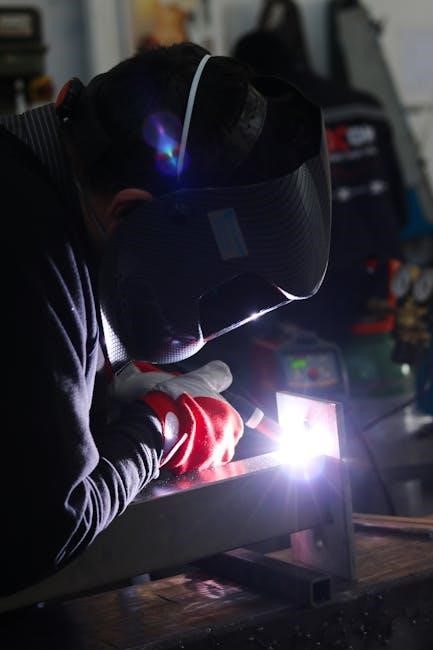
TIG Welding Filler Rod Chart – Materials & Applications
TIG welding charts categorize rods by material – mild steel, stainless steel, and aluminum – outlining applications and ensuring optimal weld quality and strength.
Mild Steel Filler Rod Chart
Mild steel TIG welding demands careful filler rod selection, guided by thickness and desired weld properties. ER70S-2 is a prevalent choice, offering excellent ductility and strength for general-purpose applications. A chart typically correlates material thickness with recommended rod diameters.
For instance, materials under 1/8 inch often pair well with 1/16-inch diameter rods, while thicker sections (3/16″ to 1/4″) benefit from 3/32-inch rods. Heavier gauges may require 1/8-inch diameter filler. Consulting a PDF chart ensures proper amperage settings, preventing burn-through or lack of fusion. Proper joint preparation is also vital for successful mild steel welds.
Remember to consider the specific steel alloy and intended service conditions when making your final selection, referencing a comprehensive TIG welding filler rod chart.
Thickness & Rod Diameter Guide for Mild Steel
A reliable TIG welding filler rod chart (PDF) is essential for matching mild steel thickness to the correct rod diameter. Generally, materials under 1/16” utilize a 0.035” (1/16”) diameter rod. For thicknesses between 1/16” and 1/8”, a 0.045” (3/32”) diameter rod is commonly recommended.
As steel thickness increases to 3/16” – 1/4”, a 0.0625” (1/8”) diameter rod provides optimal fill. Beyond 1/4”, consider 5/32” or larger diameters. These guidelines are starting points; amperage and welding technique influence the ideal choice.
Always consult a detailed chart for specific alloy recommendations and amperage ranges. Incorrect diameter selection can lead to insufficient weld penetration, porosity, or excessive spatter. Prioritize a PDF chart for on-the-job reference.
Stainless Steel Filler Rod Chart
Selecting the appropriate stainless steel TIG filler rod, guided by a comprehensive chart (PDF), is vital for corrosion resistance and weld integrity. 304/304L rods suit general-purpose stainless applications, while 316/316L rods excel in chloride-rich environments. A chart details specific alloy compositions and their suitability.
For thinner gauges (under 1/8”), 0.035” or 0.045” diameter rods are typical. Thicker sections (over 1/4”) benefit from 1/8” or 5/32” diameters. Always verify the base metal’s alloy to ensure compatibility.
Referencing a detailed PDF chart from manufacturers provides amperage settings and recommended techniques. Mismatched filler metals can compromise corrosion resistance and weld strength. Prioritize a readily available chart for accurate selection.
304/304L vs. 316/316L Stainless Steel Rods
TIG welding stainless steel demands careful filler rod selection. A chart (PDF) clarifies the differences between 304/304L and 316/316L. 304/304L, a versatile option, offers good corrosion resistance in many environments, while 316/316L boasts superior resistance, particularly against chlorides.
304/304L is cost-effective for general applications, but 316/316L is crucial for marine, chemical processing, or coastal environments. The ‘L’ designation indicates low carbon content, minimizing carbide precipitation during welding. Consult a chart for specific alloy compositions.
A detailed PDF chart will also outline amperage ranges and suitable base metals for each rod. Choosing the wrong rod can lead to corrosion issues or reduced weld strength. Prioritize a reliable chart for optimal results.
Aluminum Filler Rod Chart
TIG welding aluminum requires specialized filler rods, and a comprehensive chart (PDF) is essential for success. Aluminum alloys are numerous, demanding precise matching for optimal weld properties. Common choices include 4043 and 5356, each with distinct characteristics.
A detailed chart will outline the composition, tensile strength, and corrosion resistance of each alloy. 4043 offers excellent fluidity and is suitable for general-purpose welding, while 5356 provides higher strength and better color match. Always refer to a PDF chart for amperage settings.
Selecting the correct rod, guided by a chart, prevents cracking and ensures a strong, durable weld. Downloadable PDF charts from manufacturers provide detailed specifications and application guidelines.
4043 vs. 5356 Aluminum Filler Alloys
Choosing between 4043 and 5356 aluminum filler alloys hinges on application needs, and a detailed TIG welding filler rod chart (PDF) is invaluable. 4043 boasts excellent weldability and fluidity, making it ideal for general-purpose welding and dissimilar metal joining. However, it exhibits lower ductility and corrosion resistance.
Conversely, 5356 offers superior strength, particularly in the as-welded condition, and enhanced corrosion resistance, making it suitable for marine environments. A PDF chart will detail the specific alloy compositions and mechanical properties.
Consulting a chart helps determine the best choice based on base metal, desired weld characteristics, and post-weld heat treatment. Always prioritize a PDF chart for accurate amperage and technique guidance.
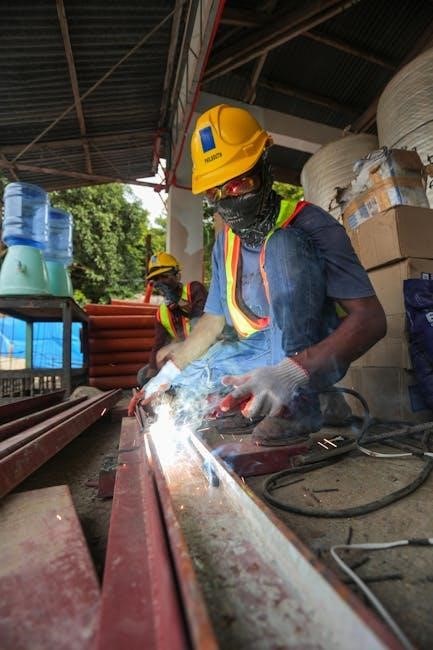
Factors Influencing Filler Rod Selection
Filler rod choice depends on base metal, thickness, and joint design; a TIG welding filler rod chart (PDF) simplifies this process for optimal results.
Base Metal Composition
Understanding the base metal’s composition is paramount when selecting a TIG welding filler rod. A TIG welding filler rod chart (PDF) often categorizes rods based on compatibility with various base metals like mild steel, stainless steel, and aluminum alloys. For instance, welding carbon steel necessitates a filler rod with similar carbon content, typically an ER70S-6 or ER70S-2.
Conversely, stainless steels demand filler metals like ER308L or ER309L, mirroring the chromium and nickel percentages in the base material to maintain corrosion resistance. Incorrect matching can lead to weld defects, reduced strength, and compromised corrosion protection. Therefore, consulting a detailed chart is essential to ensure the filler metal’s composition complements the base metal, guaranteeing a sound and durable weld.
Metal Thickness
Metal thickness significantly influences the appropriate TIG welding filler rod selection, as detailed in a comprehensive TIG welding filler rod chart (PDF). Thinner materials generally require smaller diameter filler rods – typically 0.035” or 0.045” – to prevent overheating and burn-through. Conversely, thicker sections demand larger diameter rods, like 1/8” or 3/32”, to deposit sufficient weld metal and achieve adequate penetration.
The chart will often provide guidelines correlating material thickness with recommended rod diameters. Using an undersized rod on thick material results in slow deposition and potential lack of fusion, while an oversized rod on thin material can cause distortion and porosity. Careful consideration of thickness, guided by the chart, is crucial for optimal weld quality.
Joint Design & Preparation
Proper joint design and meticulous preparation are paramount for successful TIG welding, and a TIG welding filler rod chart (PDF) doesn’t replace these fundamentals. Joint configurations – butt, lap, fillet, or corner – dictate the amount of filler metal needed. A well-prepared joint, free from contaminants like rust, oil, or mill scale, ensures optimal fusion and minimizes defects.
The chart assists in rod selection after proper joint preparation. Gaps in the joint require more filler metal, potentially necessitating a larger diameter rod or multiple passes. Beveling thicker materials creates a V-groove, improving penetration and weld strength. Always consult the chart alongside best practices for joint design to achieve a robust and reliable weld.
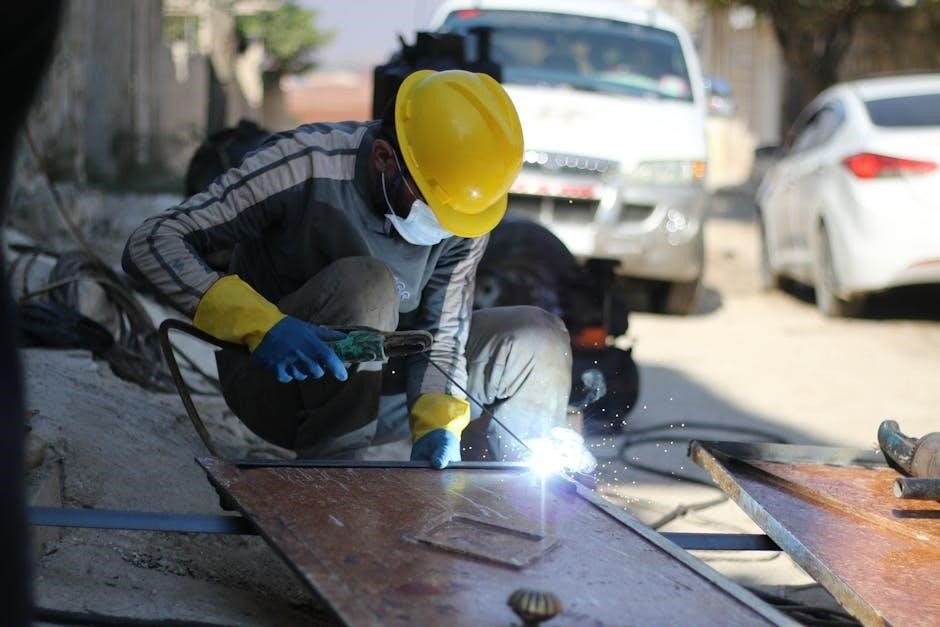
Filler Rod Diameters and Amperage Settings
Filler rod diameter directly correlates with amperage; a TIG welding filler rod chart (PDF) guides this relationship, ensuring optimal heat input and weld quality.
Relationship Between Rod Diameter and Amperage
Understanding the connection between filler rod diameter and amperage is fundamental to successful TIG welding. A TIG welding filler rod chart (PDF) typically illustrates this crucial relationship. Generally, a larger diameter rod requires higher amperage to achieve proper fusion and a stable arc. Conversely, a smaller diameter rod necessitates lower amperage settings.
Insufficient amperage with a thick rod results in poor wetting and incomplete fusion, while excessive amperage with a thin rod can lead to burn-through and an unstable weld pool. The chart provides a starting point, but adjustments are often needed based on joint geometry, material thickness, and welding technique. Experienced welders often fine-tune amperage based on visual cues like arc stability and weld bead formation, referencing the chart as a baseline.
Properly matching diameter and amperage minimizes porosity and ensures a strong, clean weld.
Choosing the Correct Diameter for Different Thicknesses
Selecting the appropriate filler rod diameter is directly tied to the thickness of the base metal being welded. A comprehensive TIG welding filler rod chart (PDF) is invaluable for this process. For thinner materials (under 1/8 inch), a smaller diameter rod (0.035″ ⎯ 0.045″) is generally recommended, providing better control and minimizing heat input.
As material thickness increases (1/8″ to 1/4″), a medium diameter rod (0.045″ ― 0.0625″) offers a good balance of deposition rate and control. For thicker sections (over 1/4″), larger diameter rods (0.0625″ ― 0.125″) are preferred to achieve adequate fill and weld speed.
The chart also considers joint design; a narrow joint benefits from a smaller rod, while a wider gap requires a larger one. Always prioritize a diameter that allows for comfortable manipulation and a stable arc.

Common Filler Rod Issues & Solutions
Troubleshooting weld defects, like porosity or cracking, often stems from incorrect filler rod selection; a chart (PDF) aids in preventing these issues.
Porosity in Welds
Porosity, appearing as small holes within the weld, is a common issue in TIG welding. Often, it’s linked to contaminants – moisture, oil, or even atmospheric gases – entering the weld pool. However, improper filler rod selection, as detailed in a TIG welding filler rod chart (PDF), can significantly contribute.
Using a filler rod not suited for the base metal or with incorrect deoxidizers can introduce porosity. For instance, selecting a rod with insufficient aluminum content when welding aluminum alloys. A chart helps match rod composition to the base metal, minimizing gas entrapment.
Furthermore, inadequate shielding gas coverage or a drafty environment exacerbate porosity. Always consult a reliable PDF chart to ensure the chosen filler rod is compatible with your shielding gas and welding parameters, leading to a sound, pore-free weld.
Cracking & Fusion Problems
Cracking and incomplete fusion represent serious weld defects, often stemming from mismatched material properties. A TIG welding filler rod chart (PDF) is vital for preventing these issues by guiding appropriate filler metal selection. Using a filler rod incompatible with the base metal’s composition creates stress concentrations, leading to cracks during cooling.
Insufficient heat input, coupled with an incorrect filler rod, can cause a lack of fusion – where the weld doesn’t properly bond with the base metal. The chart details recommended filler metals for various base metal combinations and thicknesses.
Always refer to a PDF chart to verify the filler rod’s suitability for the specific joint design and welding procedure. Proper selection, alongside correct amperage and travel speed, ensures a strong, crack-free, and fully fused weld.
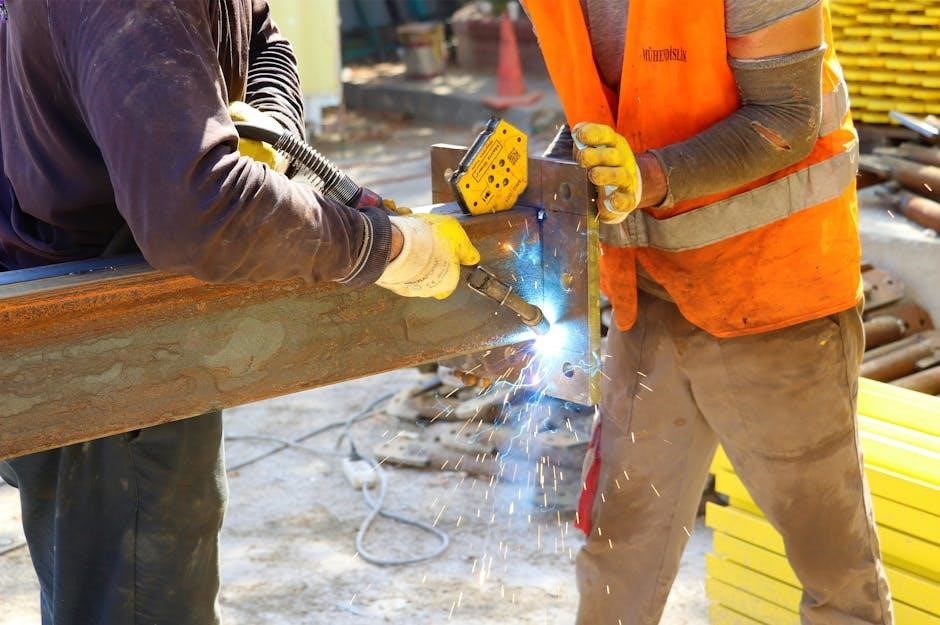
Where to Find TIG Welding Filler Rod Charts (PDF)

TIG welding filler rod charts (PDF) are readily available online through welding supply retailers and manufacturer websites, offering comprehensive material guides.
Online Resources for Filler Rod Charts
Numerous websites provide downloadable TIG welding filler rod charts in PDF format, catering to diverse welding needs. Websites like Lincoln Electric, ESAB, and Miller offer extensive resources, including detailed charts specifying filler metal selection based on base material, thickness, and welding position.
These online charts typically categorize filler rods by AWS classification (like ER70S-6 or ER308L), outlining their composition, mechanical properties, and suitable applications. Many resources also include amperage guides and recommended shielding gas mixtures.
Furthermore, welding forums and educational platforms often host user-contributed charts and guides, offering practical insights and real-world applications. A quick web search for “TIG welding filler rod chart PDF” yields a wealth of options, ensuring welders have access to the information they need for successful projects.
Manufacturer Websites & Catalogs
Directly from the source, TIG welding filler rod charts are readily available on manufacturer websites. Companies like Lincoln Electric, ESAB, and Arcair provide comprehensive catalogs, often downloadable as detailed PDF documents. These resources go beyond simple charts, offering in-depth specifications for each filler metal.
Manufacturer catalogs typically include chemical composition, mechanical properties, recommended welding parameters, and application guidelines. They often categorize rods by material type (stainless steel, aluminum, etc.) and AWS classification.
Accessing these resources directly ensures the most up-to-date information and allows welders to explore the full range of available filler metals. Many manufacturers also offer interactive tools and support to assist in filler rod selection, enhancing the welding process.

Advanced Considerations
PDF charts offer a starting point, but pulsed TIG and rod color coding require deeper understanding for optimal welding results and material compatibility.
Pulsed TIG Welding & Filler Rod Selection
Pulsed TIG welding, a refined technique, demands careful filler rod consideration beyond standard chart recommendations. The pulsed process, with its alternating high and low currents, influences melt pool control and weld bead geometry.
Generally, for pulsed TIG, a slightly smaller diameter filler rod than typically used in conventional TIG is beneficial. This promotes better fusion and reduces the risk of burn-through, especially on thinner materials. Referencing a PDF chart as a base, adjust downwards.
The specific pulse parameters – peak current, background current, pulse frequency, and duty cycle – all interact with filler metal selection. Alloys with good wetting characteristics are favored, ensuring consistent filler metal deposition during the pulse cycle. Experimentation, guided by experience and material properties, is key to optimizing pulsed TIG welding.
Color Coding of Filler Rods
TIG welding filler rods utilize a standardized color-coding system to facilitate quick identification, supplementing information found in a chart or PDF guide. This visual cue helps welders select the correct alloy without relying solely on potentially faded or obscured markings.
While not universally consistent across all manufacturers, common practices exist. For instance, stainless steel rods often feature shades of gray or silver, while aluminum alloys are typically marked with white or various metallic hues. However, relying solely on color is discouraged.
Always verify the alloy designation stamped on the rod itself and cross-reference it with a reliable chart. Color coding serves as a helpful initial indicator, but accurate alloy identification is paramount for weld integrity and material compatibility. Consult manufacturer’s documentation for precise color schemes.
Leave a Reply